Manuel drove us over to see Trujillo (a nearby town) for a morning. We stopped on the highway to Trujillo and hiked up a hill to get a photo of it. There were also stone walls–like you sometimes see in images of the countryside in the United Kingdom–running all over the land around Trujillo. The kind of stone walls where people have laboriously stacked one small rock on top of another without mortar. I don’t know how old they are, but they follow the old roads and fence in pieces of land. It is amazing that they are still standing.
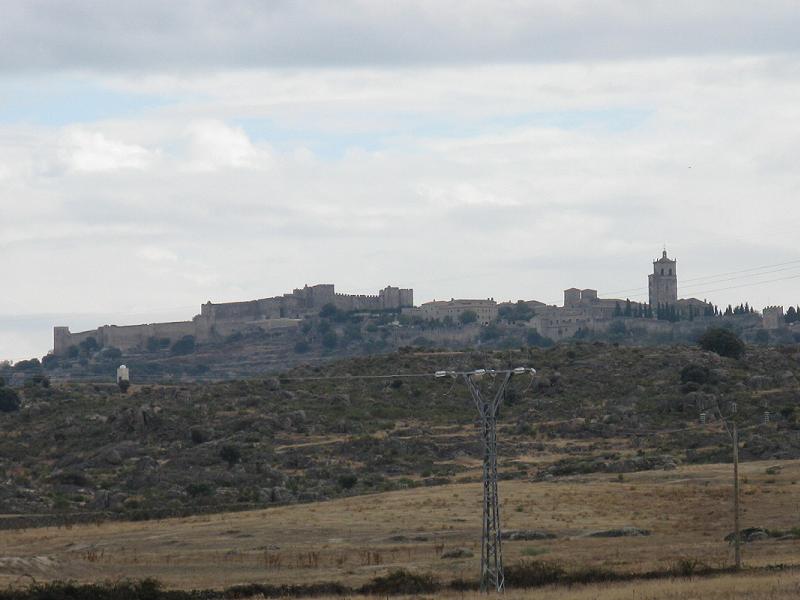
Trujillo can be seen from a distance
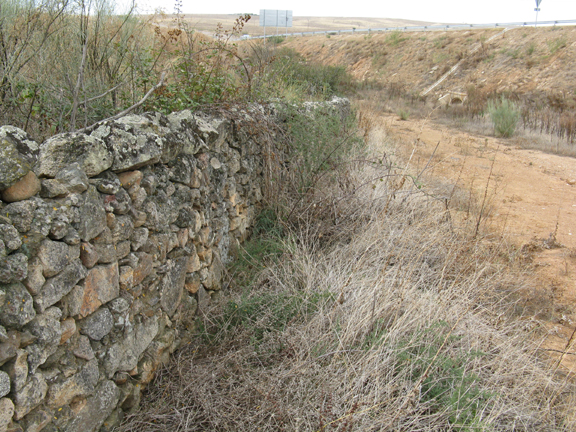
Puck climbed down to take a photo of one of the stone fences.
In Trujillo, like Cáceres, you can see some of the influence of the “New World.” Pizarro was from Trujillo, and there is a museum to him that talks about the conquering of the Incan empire. His family earned the title Marquis of the Conquest and built a palace on the main plaza where there is now a statue to Pizarro (made by an American). We sat in the plaza and had some coffee while enjoying the day. In some of the photos if you look carefully you may also see stork’s nests. As the stork is a protected animal, the city does not remove their nests.
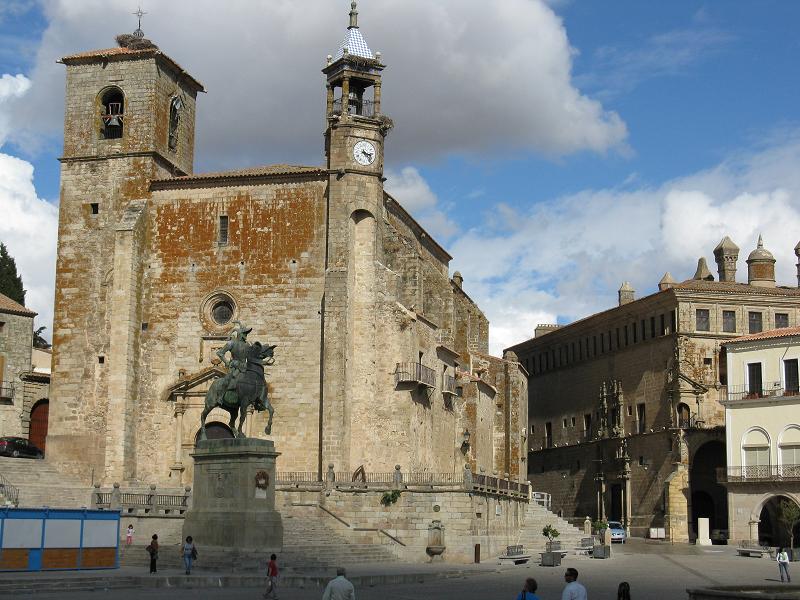
The statue of Pizarro is in the Plaza Mayor.
We walked up to the castle and took in its commanding view of the surrounding lands.
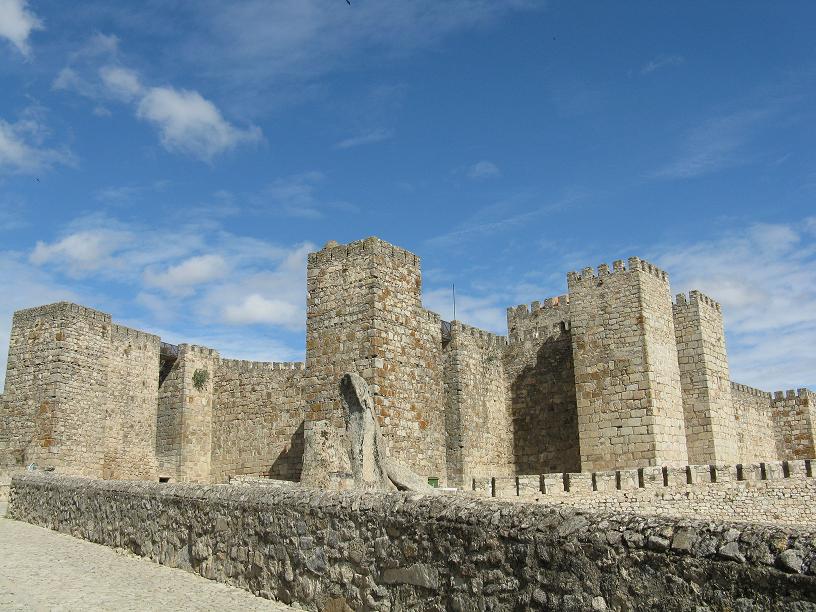
The castle of Trujillo was large and looked very solid.
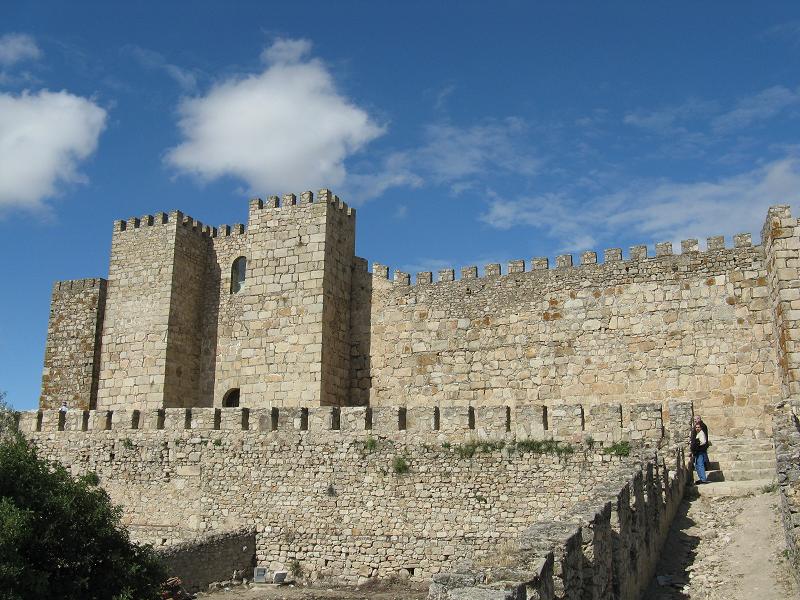
A view of the side of the castle.
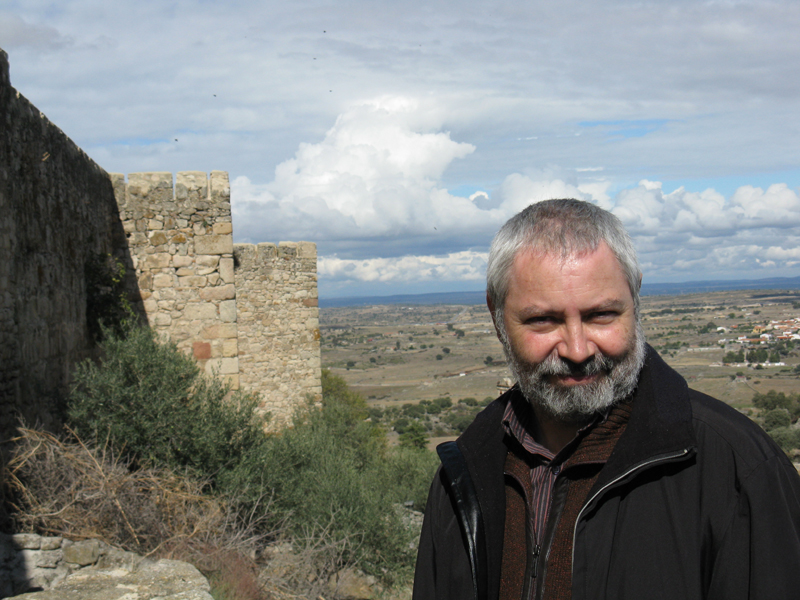
Manuel and the back of the castle. This side was the least fortified because the land dropped away behind the castle.
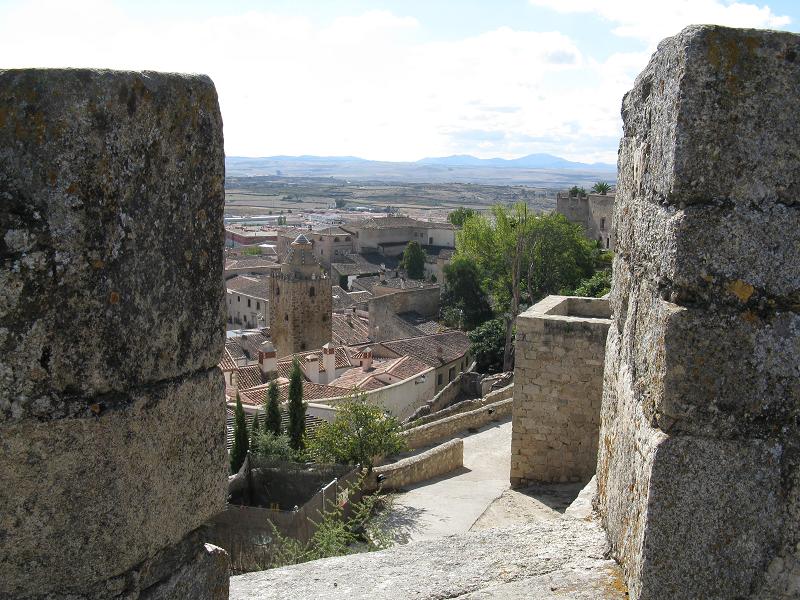
The view from the castle down into the city.
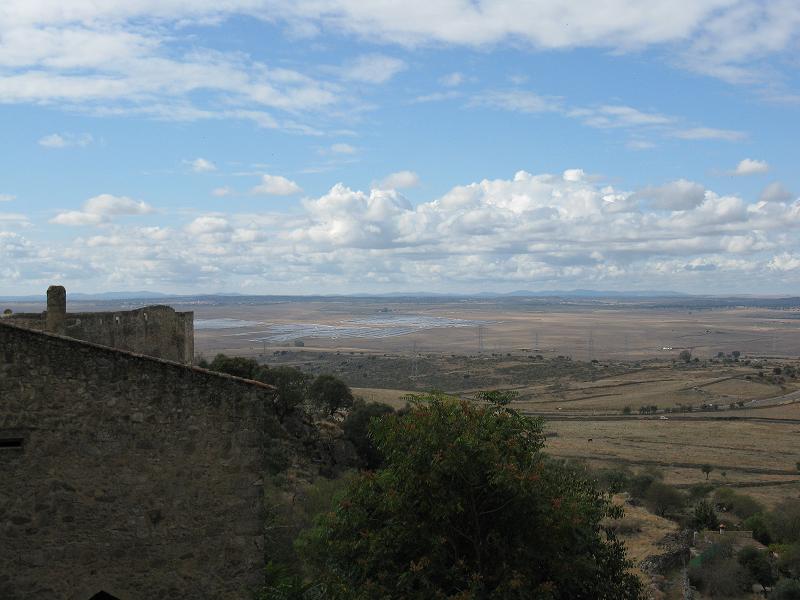
This view from the castle shows the land nearby and a solar array.
There were houses that were falling apart in the area, but there were also ones that people had fixed up and where they lived. It made for an interesting mixture of old and new, ruins and homes.
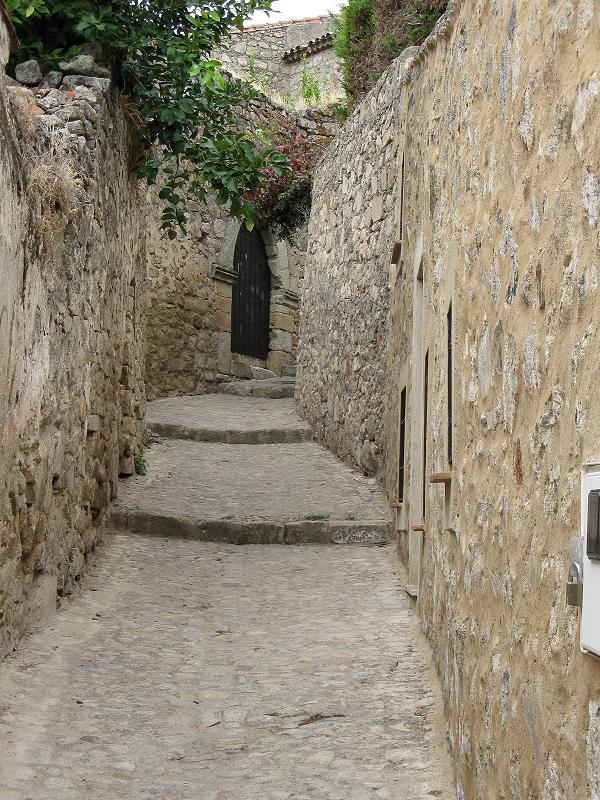
One of the streets in the old quarter of Trujillo
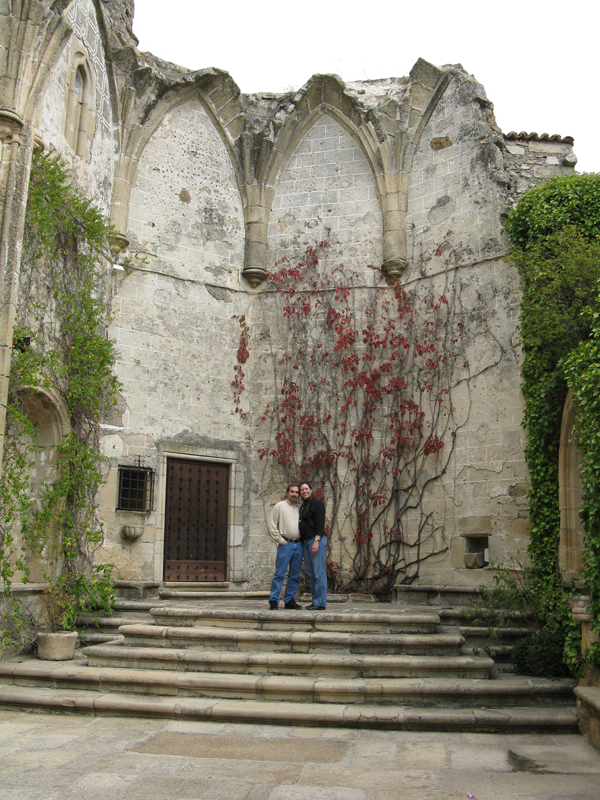
One of Trujillo's churches with no roof.
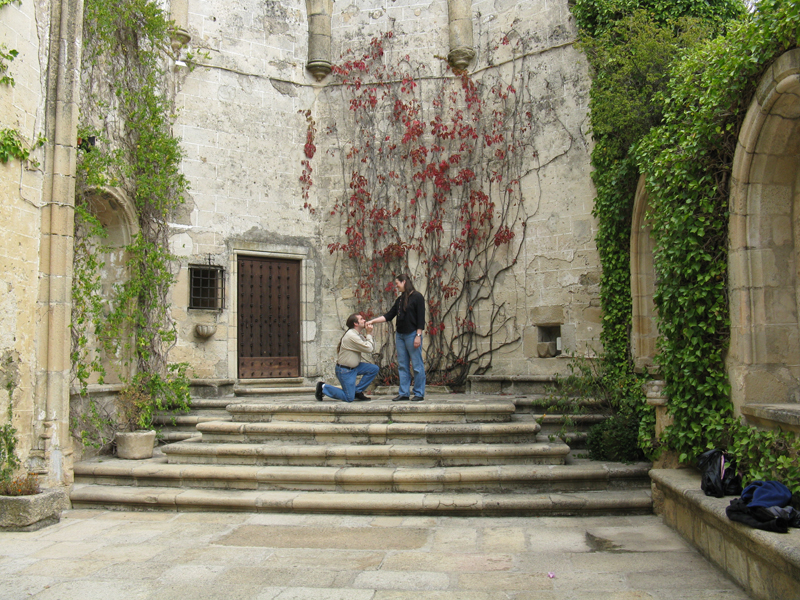
A moment together in the church
The main plaza in Trujillo. Many cities in Spain have a main plaza where vendors used to have their designated areas to sell things and also where many community events took place. Trujillo’s is a lot more open, and several of the palaces have their coat of arms (and sometimes a balcony) on the corner facing the plaza instead of over their main door which was on a side street.
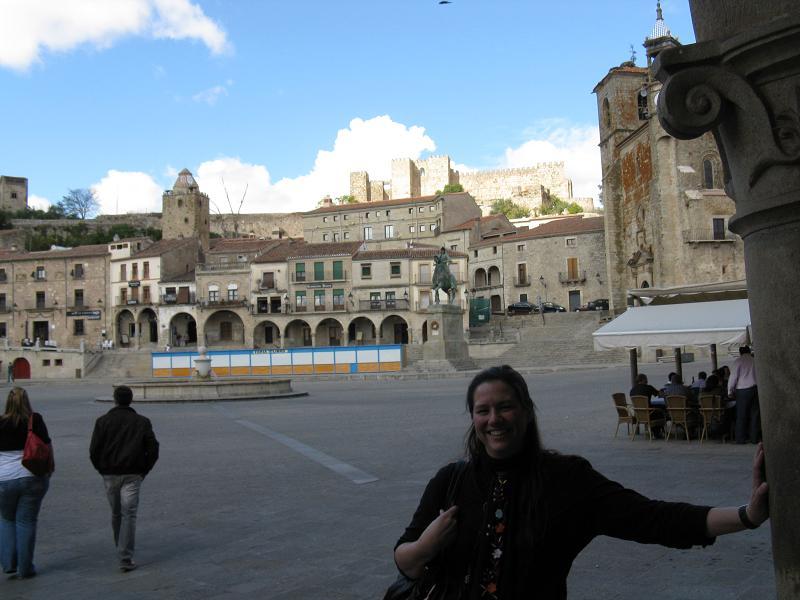
This wider view of the plaza shows that it is a very open space.
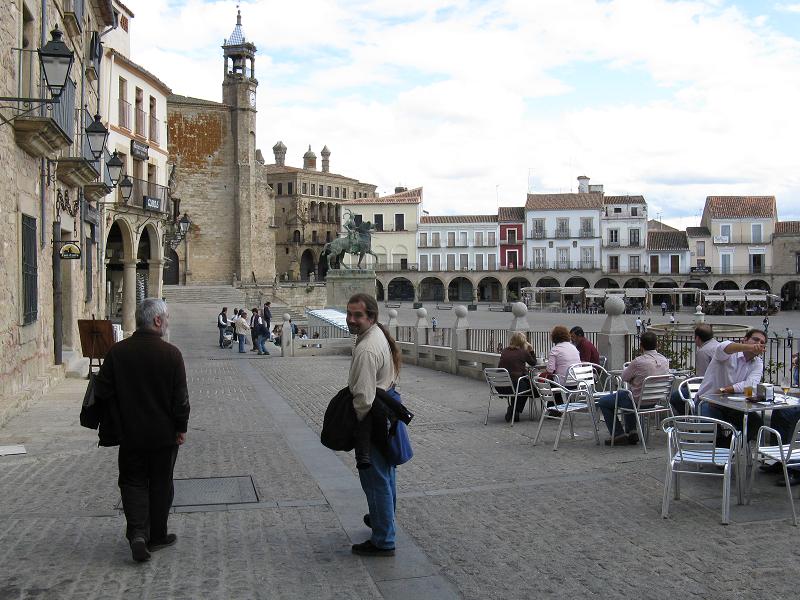
Another view of the plaza.
Another morning, we went hiking on landcovered in boulders that used to be owned by a German artist named Ben Vautier. It was outside the town of Barruecos.
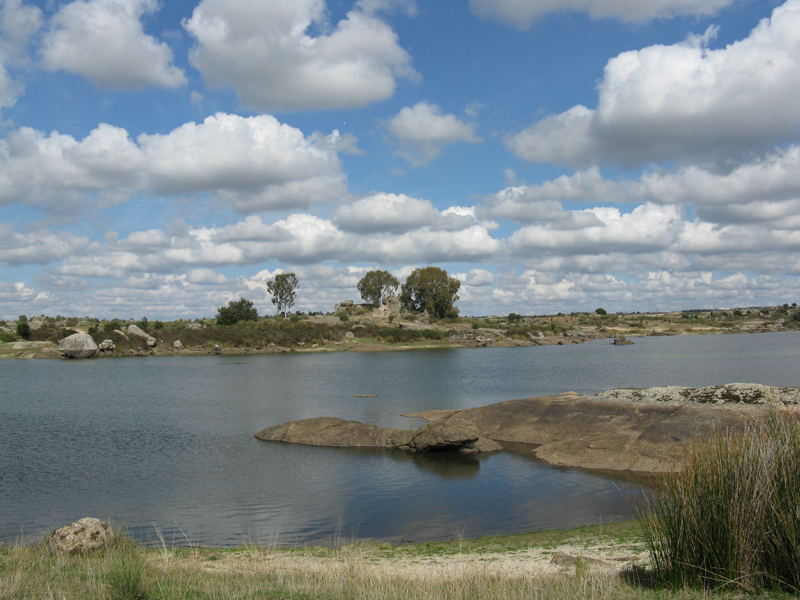
It was a gorgeous day with lovely rocks and clouds. Can you see the rock turtle heading for land?
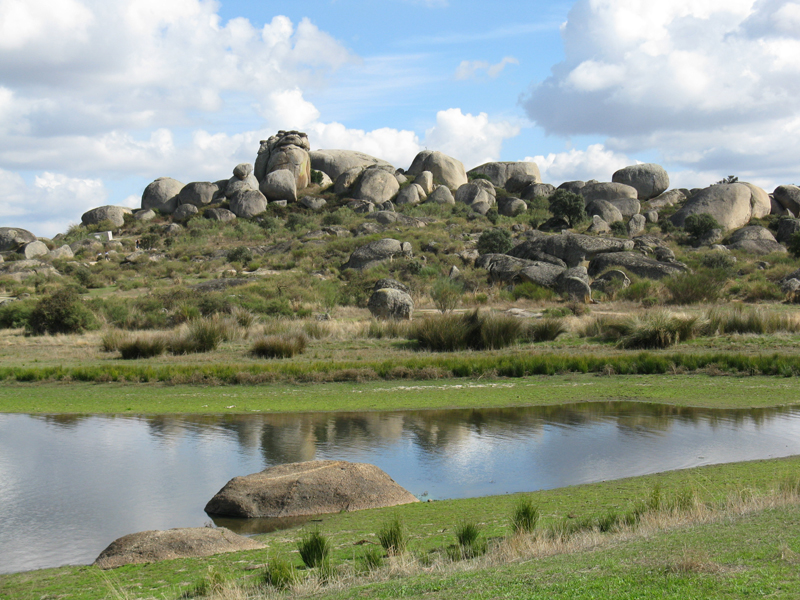
If you look carefully, you can see a big, white cement square on the left side of this photo. The cement block has a car stuck in it halfway--it's part of Vautier's artwork. It was a gorgeous day for hiking.
The weekend was an amazing experience, and we enjoyed our time with Chus and Manuel and the daily walks with Lula–getting to see her run and play with neighborhood dogs.
It has been awhile since my last update. I had to go back to see what I had last written about. The weekend after the swordfighting conference, Puck and I hopped a train to Cáceres–a little city between Madrid and Portugal (south-west of Madrid)–to visit our friends Manuel and Chus. Manuel is a doctor who has been putting together a bibliography on Spanish fencing, and he and Chus had also invited me to visit when I was in Spain in 2004 (they were living in Santiago de Compostela in north-western Spain at the time). I should note that while many of us in the States wouldn’t think anything of inviting someone to stay at our home, it is a bit against the cultural norm here in Spain. It is even fairly rare to invite friends over to your house to do things together.
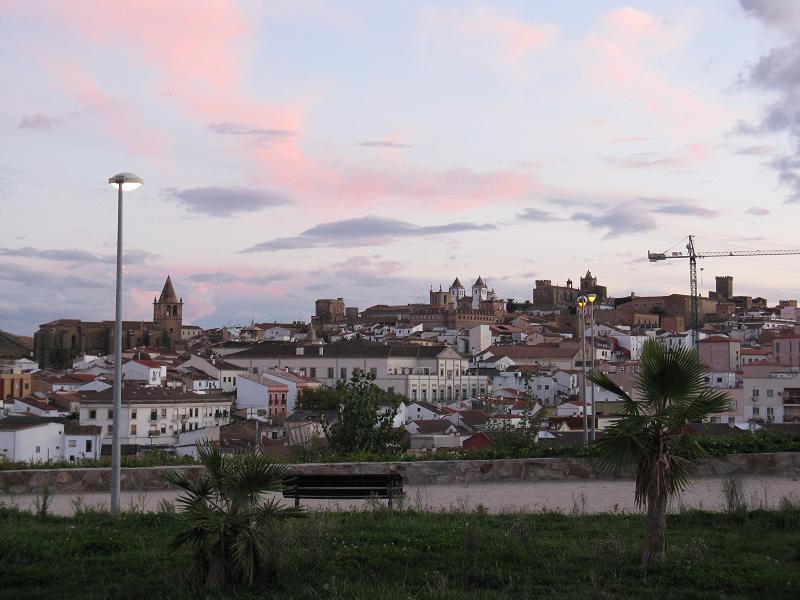
This is the view from just around the corner from the Manuel’s apartment--where we would take their pup for walks.
Manuel and Chus absolutely spoiled us, and we had a delightful time playing with their 6-month old greyhound pup Lula. They had rescued her from a breeder that was going to have her put down due to a leg defect. Lula absolutely loves to run and play. She has her own basket of toys, and she’ll pull them out and bring them to you to play. She can also untie knots and has a very long tail as you can see below.
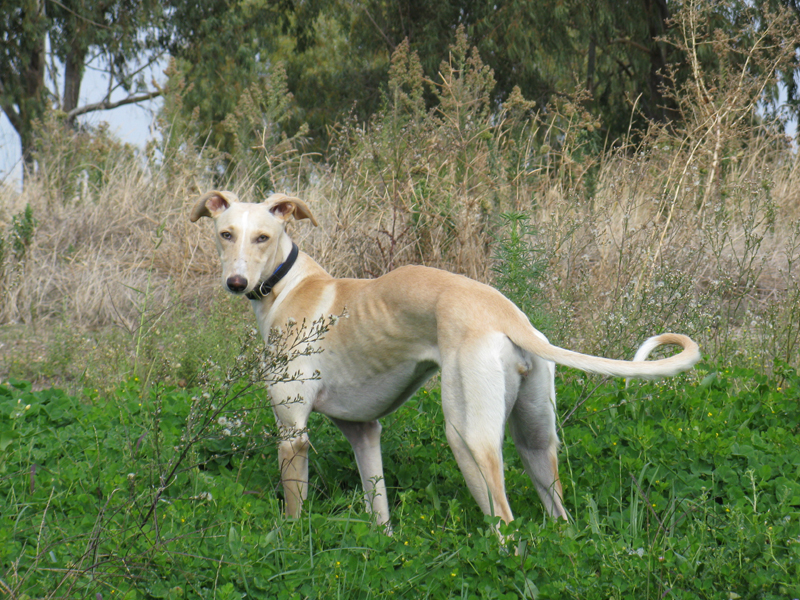
Lula ready to frolick and play.
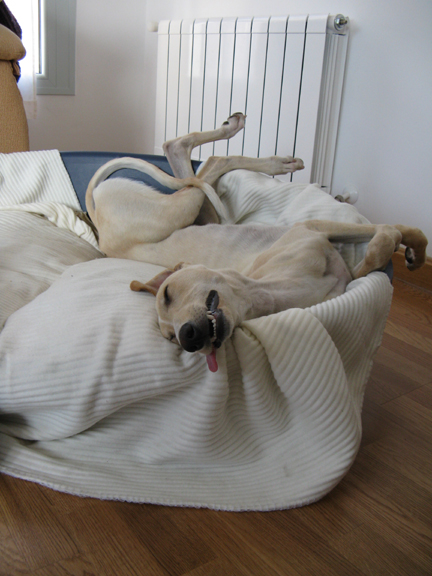
She's just asleep...really.
They had bought special foods from the region for us to try (a creamy cheese, local jam, apple bread, a dessert liquor, and serrano ham). You can see the cheese in one of the photos below. You have to open the cheese and fold the top back to get at the creamy center. Chus was quite the hostess, and Puck’s Spanish really blossomed during the weekend with them.
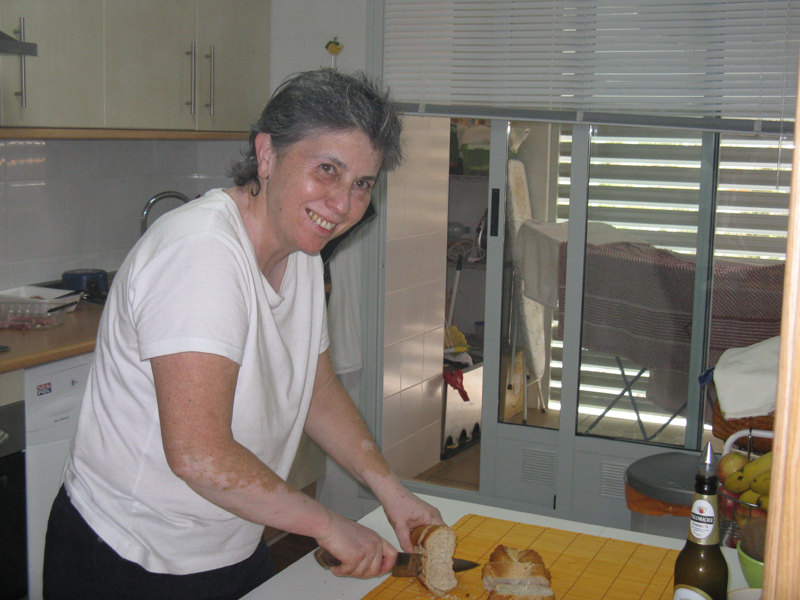
Chus slicing up some bread for lunch.
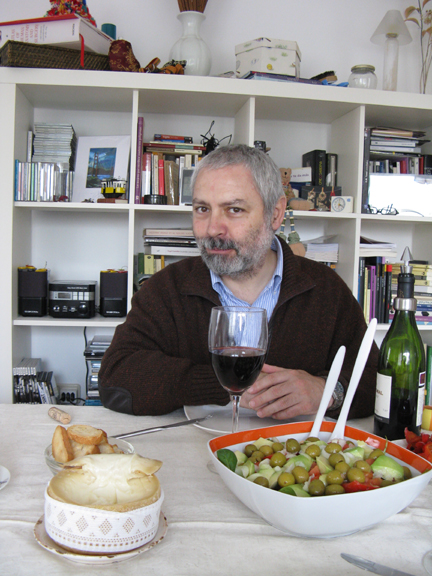
Part of a lovely lunch. You can see the cheese open.
Manuel also took us for walks around the city and told us about the history of Cáceres. The old quarter of Cáceres is also quite lovely and shows “New World” touches. In some of the architecture decorations, you will see Native American statues. In fact, one of Moctezuma’s daughters married a Spaniard, and her palace is in Cáceres.
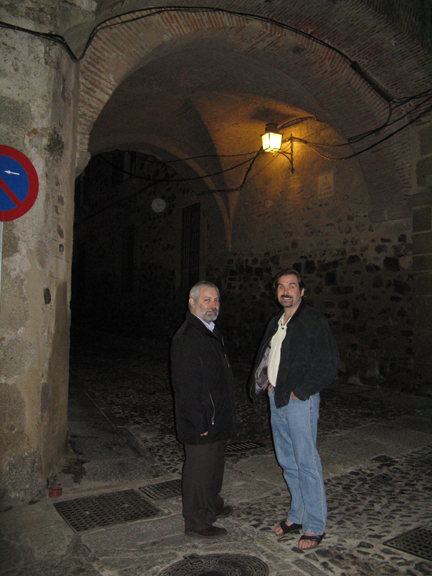
Manuel and Paco under a stone archway into the old part of the city.
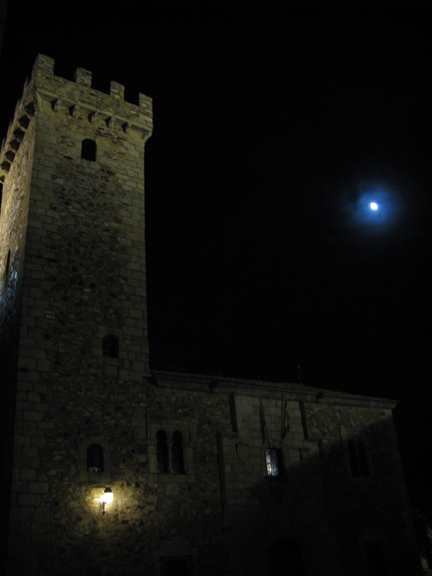
It was a beautiful night with the moon providing plenty of light.
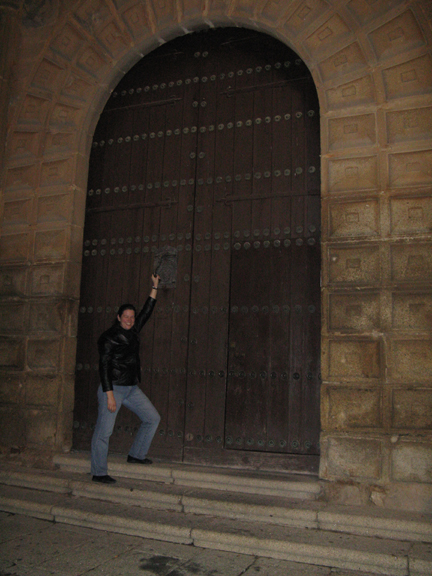
A door for giants!
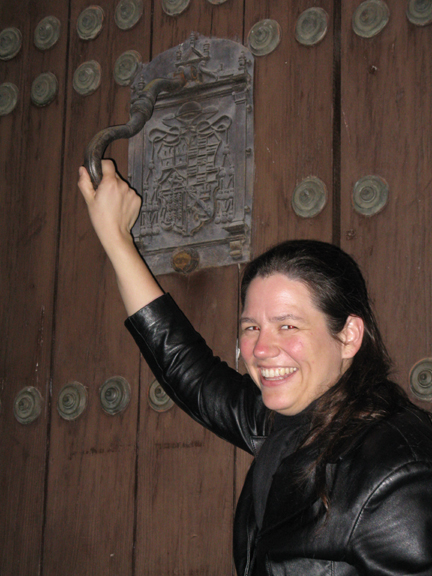
Do you think they'll hear me inside if I knock?
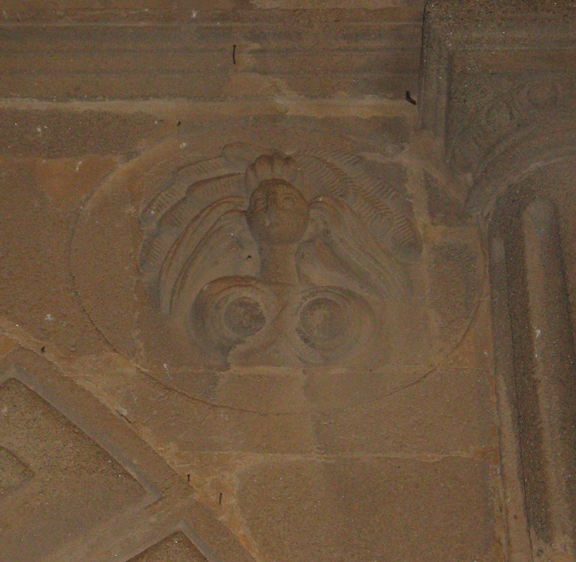
The architecture in Cáceres at times reflects the influence of the "New World" in Spain. Here a Native American graces the architecture of a building.
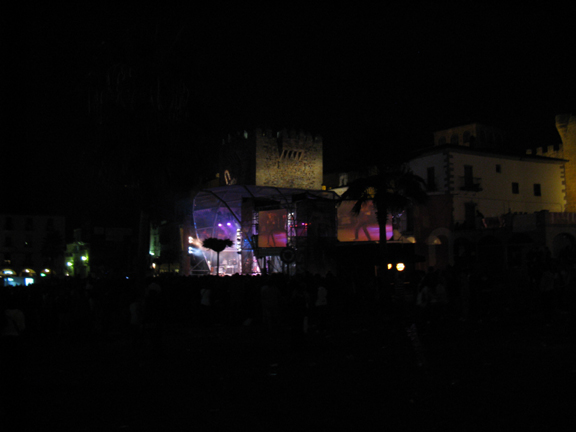
There were concerts in Cáceres' Plaza Mayor Friday and Saturday.
This is my first time to blog–a new experience. It will take a bit to get the kinks worked out I am sure, so let me know if something isn’t working. What inspired me to come to the blogging world? From September 2008 to October 2009, I am living and doing research in Madrid, Spain. Here you can find posts related to my experiences in Spain. The first batch will be edited from my letters home.
Last weekend we went to the AEEA’s 3rd annual conference in El Escorial on historical fencing, and we had a good time. We met people from various parts of Spain, Great Britain, Italy and Germany, and hopefully we’ll see some of them again during our year here. It was a fun and interesting experience.
I met with my research supervisor here in Spain this past week, and he was very nice. Plus, I went to lunch with Puck and some of the people he works with. This weekend – in a few minutes actually – we are heading to Caceres, Spain, to visit our friends Manuel and Chus and their dog Lula. We’re looking forward to the chance to love on a dog, as we miss Shakti a lot.
The National Library / La Biblioteca Nacional
Today I took my shiny new researcher’s card to Spain’s National Library (BNE), determined to figure out their system. They aren’t like a typical library in the United States. You have to go to the correct room for the books you want (the General Room for me today), have a work area assigned to you, fill out a card for what you want, get it stamped, put it in the right box, and wait for about 20-30 minutes. Then a little flashing red light goes off at your desk and you trundle back to the librarians’ area to pick up the requested books. They don’t check books out to the public, so you have to work with the materials at your work area. They also have strict rules on what you can and can’t bring into the work areas–no bags (they give you a clear, plastic bag to put your stuff in, and you check your bags in the cloakroom), no folders, no food/drink, no hand cream, only up to 100 pieces of paper, etc., and they check your things on the way in and out.
Whew! After all that, you get a craving for a bite to eat or a shot of coffee to get the brain cells working again, so you sneak down three flights of stairs (or take the elevator) to the cafeteria…a whole new system to figure out. But that’s life in a new place…so many little things to learn. 🙂 Their cafeteria is priced very well though, and the coffee is caffeine nirvana.
While at the BNE today, I mainly looked at two texts. One was a short text published in Seville in 1654 railing against duelling as inherently evil and anti-Christian. But the other document had an interesting coincidence…
On this day (September 29th) 367 years ago (1641)…
Don Gaspar Alonso Pérez Guzmán the Good, the 9th Duke of Medina-Sidonia, challenged Juan de Braganza to a duel and declared that he would be waiting for him for 80 days to show himself–from October 1st until December 19th.
Who were these two men?
Gaspar Alonso Pérez Guzmán the Good was the grandson of the Duke who welcomed Carranza (the father of Spanish fencing) into his household for a time and more infamously led the failed Spanish Armada attack on England. Gaspar appears to have issued the challenge to try and save face after he was involved in a conspiracy against the king of Spain and had some of his lands confiscated.
Juan de Braganza is usually called John IV of Portugal in English. He was Gaspar’s brother-in-law (married to Gaspar’s sister Luisa), and he became king of Portugal in 1640 when Portugal rebelled against Philip IV to regain its independence from Spain.
Did the duel take place?
No, the two never did fight. Portugal maintained its independence from Spain, and Gaspar managed to keep his head–unlike the Marquis of Ayamonte (his co-conspirator who was beheaded).