Filed as General with Comments Off on On Orthodoxy in Destreza
Let’s talk about the atajo for a moment and compare Pacheco’s Atajo with Carranza’s.
Pacheco tells us that there are 3 movements: • Rising (violent) to lift the blade • Offline (remiss) to cover the opposing blade • Descending (Natural) to subject it
Pacheco also has rules about the atajo: • It must be placed from above • It must subject with equal or greater degrees of strength • It must not participate in extremes • It must close the line such that the adversary cannot strike you with a single movement
Within that space, Pacheco has a lot of freedom.
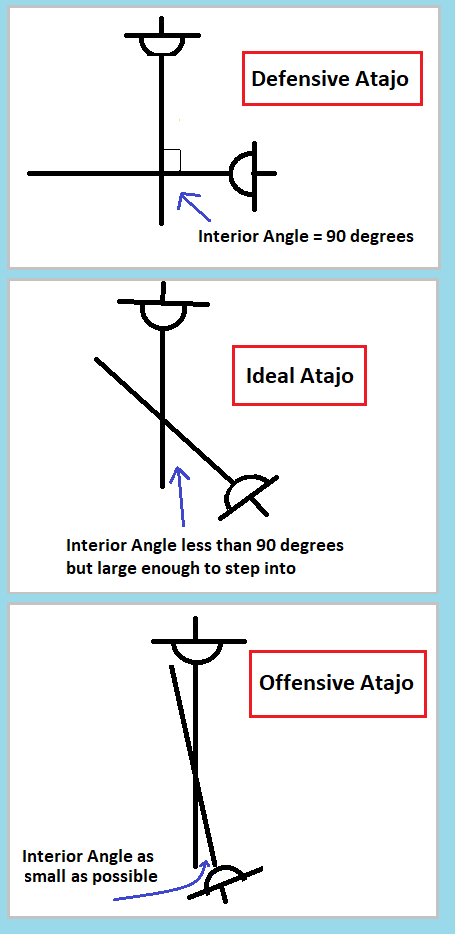
Interior Angles
Your most defensive atajo creates a true cross (90-degrees) across the other sword. The smaller the interior angle gets between the swords, the less defensive power you have but your offensive potential increases. You still can’t let go of all that crossing power because you need to close the line. For the moment, let’s ignore anything less than 20 degrees in the cross. Let’s also leave out anything that isn’t in 10 degree increments even though we know 37 degrees in the cross exists and we can do it. That gives us 30, 40, 50, 60, 70, 80, and 90 degrees in the crossing of blades to make atajo for 7 valid options.
Interior Angle = 7 choices
We’re going to work in the middle of the adversary’s blade and that blade has 10 degrees of strength. To avoid extremes, we’ll only take the middle ones of 4,5,6, and 7. That’s 4 options. (Let’s also ignore that we can choose which part of our blade we use and just assume we’re always equal.)
Interior Angle and Degrees of Strength = 7 x 4 = 28 possible choices
Now we’re going to vary the height of the hilt by dropping our hand while lifting the tip to create that characteristic plow shape for the atajo’s engagement. Lower hilt means we increase the size of the opponent’s circular actions. Let’s call that 0-4 in which 4 is as low as our waist and 0 is parallel to the floor with the arm extended for 5 options.
7 x 4 x 5 = 140 choices
What about the pressure in the blade? Are we soft or hard? What about the step we take with the atajo? Or no step at all. Every one of these makes our number of choices explode exponentially and all of them are valid choices inside Pacheco’s framework for atajo.
Even our most orthodox master is really providing the fencer with this overwhelming ocean of possible atajos and it’s on us to choose correctly. Even Pacheco wouldn’t be comfortable with us keeping our hands in very fixed places because that would be the absolution of our responsibility to choose the ideal Medio.
But, what about Carranza? Carranza is principle-based and he is also a choose the beautiful Medio guy. He’s always critically examining swordplay to look for the truth, and he seeks demonstrations and tests to verify that his ideas work. Natural power defeats violent. Smaller movements beat larger movements. We know that he’s using a cause-based reasoning system to interrogate swordplay and that he intentionally tailors the training to the student’s body and spirit.
His definition is: “Atajo in the destreza, is when one of the weapons is placed over the other, so that the one that is apt to move away has fewer places by which to escape.”
Carranza is always there in the background with matches and a smile waiting to burn down our cathedrals if they become a home to falsehoods.
If Carranza found that a student couldn’t form atajos because they were too short to place them on a much taller adversary’s weapon you have to believe that his answer would be, “Fuck the atajo. If it doesn’t work for you, we’re doing something else.”
This isn’t a permission slip to go crazy with nonsense technique. He and Pacheco are closer allies than you would think. Pacheco gives you all these rules and expects you to take responsibility within his orthodoxy to choose the right answer. Carranza gives you the entire universe and expects you to find the right answer. Pacheco has captured the culture and tradition of Destreza in his writing. He has made the problem easier to solve by giving you system and structure.
Carranza has given you a discovery process and it’s the first guiding principle of Destreza, always seek the truth. Identify the fundamental causes of the challenge and use that to get to the truth. Once you understand, test your answers over and over again. Doing that gives you knowledge and practice will give you art.
It could be that your causes are to recreate a historical duel, or to rediscover the system practiced by a specific author, or to fence for sport, or create a hybrid Italian-Spanish system, or to experience a little joy with your friends. All of these are totally valid causes from which a Destreza can be derived. Your own body, weapons, and opponents will make your Destreza live in your unique body. The diverse causes result in different unique expressions of Destreza and they’re all valid and you’re striving to do this thing with good character.
I certainly have my opinions about what is good Destreza and I know (more or less) what my causes are on any given day.
All this to say, Destreza is for everyone because truth is for everyone. Destreza plainly tells us that if someone has something different about their body, it is our responsibility to seek the truth, to test our theories, and to train towards art in way that serves that person. Ideally, we preserve the tradition so that it’s recognizably still part of our family but always truth is the beginning, practice is the journey, and art is the destination.
Filed as General with Comments Off on Skill Progression in Fencing
The stages of learning to fence with gateway skills
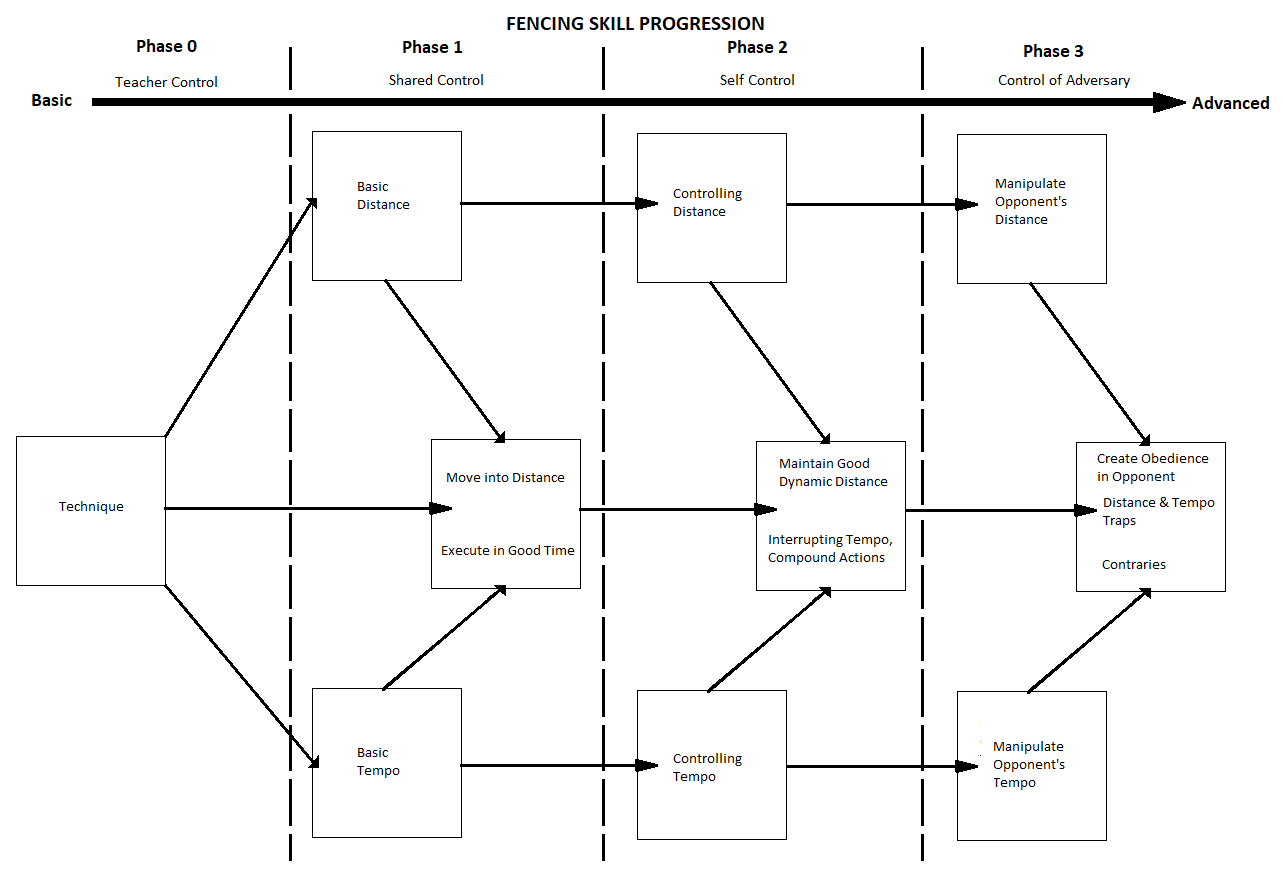
Reading the Skill Progression Chart
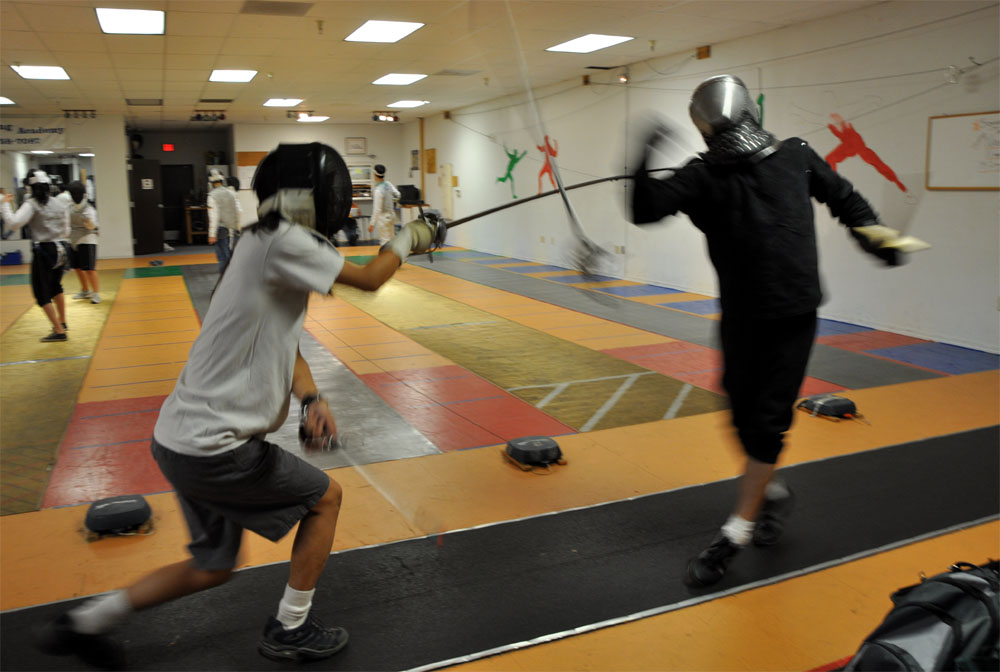
This chart depicts the student’s expectations and provides one rubric for evaluation and guiding the progress of a fencing student. (This is not intended to be the single unifying truth of fencing but may provide a useful model for teaching students and evaluating their ability.)
When a student begins with a new skill, they typically lack the ability to correctly use time, distance, and technique to execute an action.
Top Row – Distance
Middle Row – Technique
Bottom Row – Tempo
When working with a beginning student, the instructor can set considerations of tempo aside, manage the distance themselves, and concentrate on fundamental execution of technique. However, to progress to higher levels execution of technique there are gateway skills in the Distance and Tempo lanes which are required to execute fencing actions.
An advanced fencer working with a teacher may begin with a new skill in Phase 0 but their ability to progress is aided by their previous experience. Specifically, when introducing new technique, it is perfectly acceptable (and even recommended) that the instructor set the distance and set aside tempo considerations until the mechanical aspects of the actions are correctly executed. As the student demonstrates technical proficiency they move to higher phases in which distance and tempo are used to execute at a higher level.
“Why doesn’t this work when I am fencing?”
In addition, if your student is having trouble moving from training to effective fencing this progression may provide some insight into the key skills that allow the student to execute actions that are effective.
Phase 0 – New Skill and Building Fundamentals
Distance: The instructor sets and manages the distance.
Tempo: Fighting tempo is secondary to technical execution of the fencing action being learned. Actions are often broken into multiple tempi to facilitate learning key skills at a mechanical level.
Technique:
Offense: The instructor may ask for extension of the arm, then firing of the legs for the lunge. Is the arm first? Is it fully extended? Is the touch being delivered with the correct pressure, hand position, line closure, bend in the weapon?
Defense: The instructor may ask for a pause between the parry and the riposte. Are the parry’s blade and hand position correct? Did the student sink during the parry? In the riposte is the student extending the arm or trying to post over the front leg by lifting the rear heel? Are they creating effective ripostes by glide? Is the closure of line correct?
Phase 1 – Developing Skill
Distance: The student may be asked to use an advance to reach correct distance. The instructor and student will work together to find correct distance for each action, the student’s effective range for attacks, and learning the range of the adversary.
Tempo: When technical execution is correct, the pair moves into training martial tempo. Actions which were broken into pieces for technical training are blended into faster and more martially correct tempi. Attacks must be delivered quickly such that there is a noticeable impact and parries must be able to defeat attacks at speed.
Technique:
Offense: The lunge will be delivered on a single command with the arm extending first every time. The instructor and student together will develop speed, violence, balance, length, and coordination of the attack. The advance lunge will be used to develop the student’s sense of distance.
Defense: Parries must wait until the last possible moment. Ripostes must immediately follow the parry like lightning. The student is expected to elude the instructor’s parries with attacks by disengagement executed in the tempo of the instructor’s attempt to parry or seize the blade.
Phase 2 – Applying Skills to Fighting
By using probing actions, the student draws information from the adversary to determine their preferred attacks, parries, and likelihood to counterattack. The student uses actions of concealment to hide this information from their opponent. Before fencing the student evaluates the opponent based on their knowledge of the adversary to develop a bout strategy and within the bout adapts to the situation using tactics informed by the strategy and the information gathered from probing actions.
Distance: The student learns to train with mobility and is responsible for finding and preserving their distance. (The instructor asks the student to maintain distance as they perform unrehearsed footwork and then cues the student’s action.) The advance lunge is tied to compound fencing actions (feints, actions on the blade, renewed attacks), and the coordinated step is introduced.
Tempo: When martial tempo is achieved this skill is leveraged to develop feints, interruptions, and reversals of the opponent’s fencing actions. Examples might include attacks into preparation and counterattacks. The student is expected to develop control of not just their own tempo but the ability to read, respond to, and interrupt their adversary’s tempo.
Technique:
Offense: The control of tempo and distance means that the student begins to execute effective feints, and compound feints which cause the adversary’s defense to collapse, actions on the blade which dominate or deviate the weapon, and renewed attacks which take advantage of hesitation in the adversary. The student begins to mix and match all of these while developing the ability to press forward and apply pressure to the opponent. The student and instructor developing deeper fencing phrases consisting of multiple actions chained together and tactical exercises in which actions must be chosen in the moment.
Defense: The student develops parry patterns and the ability to parry without yielding ground. Ripostes can include feints, situationally actions on the blade, and renewed attacks if the adversary fails to respond effectively. The transition from defense to offense includes rapid changes in direction facilitated by dynamic footwork.
Counteroffense: The student learns to timethrust in every line, to attack into preparations, to attack into feints, and to read and respond to the adversary’s attempt to seize the weapon and turn that against them.
Phase 3 – Effective use of Skills in Fighting
Strategies and tactics are leveraged to force the adversary out of their preferred mode of fighting into the student’s ideal fight. Probing actions and actions of concealment are leveraged to adapt in real-time to the situation.
Distance: The student learns to use distance traps to rapidly collapse the distance. Examples might include falling back during defensive actions to set a pattern, and then suddenly holding ground or moving forward on a parry. Presenting a series of lunges to establish a distance pattern and then adding an advance lunge or a lunge with a gaining step. They develop the ability to read the space such that they can choose the ideal counterattacking voiding actions for the opponent.
Tempo: Feints may now include tempo traps that take an adversary into more damaging obedience such as a short pause during a feint by disengagement that draws the parry without fully committing to a line. If the adversary is prone to counterattacks, the student may draw counterattacks with the intention of defeating them.
Technique:
Offense: Offense now includes an understanding of the adversary’s likely responses and can dynamically adapt at a tactical level to capitalize on the opponent’s actions.
Defense: The defense includes intentional variety which conceal the student’s patterns such that the opponent cannot easily force the student into obedience. Ripostes can adapt dynamically to the adversary’s defense to establish obedience.
Counteroffense: The student can read tempo well enough to draw a counterattack and defeat it with either a parry-riposte or a counterattack into the counterattack. If the adversary is skilled enough to feint in order to draw a counterattack the student may perceive the feint, and counterattack into it.
Not for me but rather I want to introduce you to yourself as I see you.
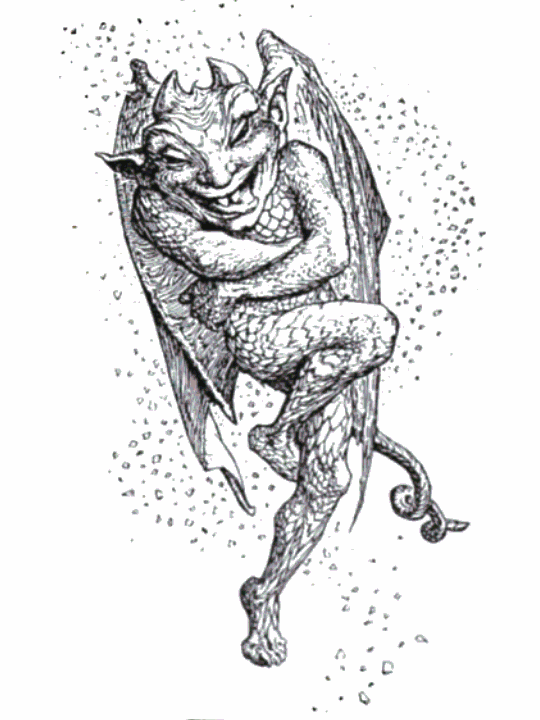
I feel pretty positive there are 100 goblins in your mind telling you that you aren’t good enough, that your work is bad, that you don’t fence well enough, that you are an imposter in a tradition to which you do not belong.
Consider me the final goblin and I’m here to tell you who you really are.
You struggle, you strive, you suffer… and why? There are traditions of combat, combat with swords. They were at once beautiful but terrible and many of them were lost.
Against all odds and in defiance of the world around you, you chose to become part of these traditions. Your actions and your work restores them, preserves them, resurrects them from their paper graves to give them new light realized in the art of human beings again.
Every day, someone in this world, without knowing it, produces the best of their tradition for the day in that moment: a moment the dead masters would cherish because their voice speaks through you as part of a living story.
When you fence you become an artist and an alchemist of violence; that which was meant for destruction and killing you transmute into beauty, fellowship, knowledge, skill.
The early goblins will tell you that you don’t belong here… Listen to me, your final goblin, you are a part of your tradition and its history.
The work you do today allows it to live, to breathe, to grow. You belong here, you are part of the history of the tradition, and when you are long dead those who follow you may well look back at your work and nod, “Were it not for this person, we would be less.”
The tradition is not the sole property of the perfect, it is for those who show up.
This isn’t the only kind of fencing lesson one can teach but when you begin writing your own lessons, this is a useful standard format which breaks down into:
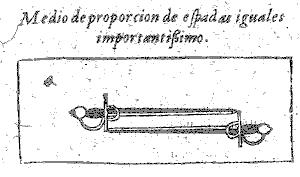
“Measure of proportion when the swords are of equal length – very important” – Pacheco
“To measure the swords is to choose the Medio de Proporción.”
~Carranza
“89. The measure of proportion [Medio de proporción] is to measure the swords or whatever other weapon, and that the tip of the opponent’s sword does not pass the guard of the skilled swordsman.”
~Pacheco
“And thus our author, with very firm examples, proved this point in the illustration of the graduated sword, and the experience for its part has proved it, I do not have to linger on this: I only want to tell you with this our illustration of the long and short sword, the measure that you should choose, if your opponent carries a long one: following in everything the order of the illustration previous to this one, not allowing that in any way the tip of the opponent’s sword passes your guard, for the reasons mentioned before:…”
~Pacheco
These examples of Measuring the swords define the MdP by describing the material and efficient causes. (ie… Material: Of what is the act of finding MdP composed? Two fencers and swords. Efficient cause: How is it done? You measure the extended swords against each other.)
Both of these are practical descriptions of the physical action. It’s very odd in a system which prides itself on demonstrating **why** something should be done.
When Ettenhard defines it, he addresses this conflict by defining MdP using the final cause. (ie… Final cause: What is the intended purpose or goal of the MdP?)
“To choose the Measure of Proportion is to determine a proportionate and convenient distance from which the Swordsman can recognize the movements of his opponent, since for whatever determination of his, there should proceed, of body like of arm and Sword: Of body, by means of footwork: and of Sword, by means of the formation of the Technique.”
~Ettenhard
In my opinion, this is the superior definition because it links the causes together. When these causes appear to come into conflict, (I measured the swords according to the rule but I can’t defend myself), you need to obey the final cause. It would be stupid to measure the swords, be repeatedly struck, and insist you were technically correct when setting your distance.
Pacheco tends to provide rules in sweeping absolutes which can be taken as dogma. Other authors (Ettenhard, Figueriedo) correctly inject some sense into these assertions asking the fencer to use some good sense when reading his work.
Do I have evidence that this understanding of MdP is better for Destreza? I think I do.
Over the length of the tradition we see the simple rule of setting MdP change over time. Why? The swords changed to include cup hilts (material cause: Of what is this composed?). That causes a change in the efficient cause such that the point can now be as close as the pommel instead of the guard (efficient cause: How is this achieved?).
What didn’t change is the final cause (what is the purpose or goal?). That’s what Ettenhard describes and while other parts of the definition changed, they changed to serve the function of the measuring of swords.
It’s not that you cannot be struck, but rather you can recognize the movements forming the attack and effectively defend. That’s the Occam’s Razor of MdP. (In my opinion.)
Beyond that we know that Medio concept is an Aristotelian virtue which strongly suggests that there is more to MdP than just measuring the swords. Aristotelian virtues ask us to choose between two extremes mindfully and choosing well creates beauty. We know that in that case the answer can vary substantially based on the moment-to-moment context and that can be difficult. Being a beautiful fencer means accepting that you are responsible for solving difficult problems in an ever-changing context but when you do it well your will, guided by science, finds a proportionate choice and that choice is beautiful… science and practice leads us to art.